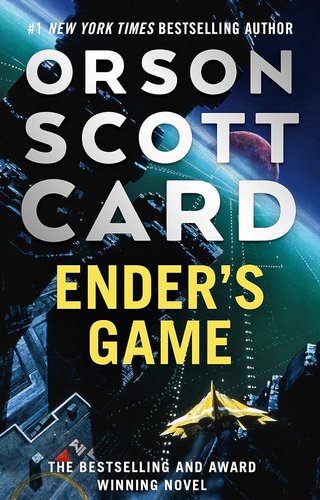
Books Like Ender's Game: Brilliant Kids, Impossible Wars
If you loved Ender's Game by Orson Scott Card.
Ender’s Game endures because the games were never games: a gifted child, an unwinnable war, and a final twist that turns triumph into tragedy. If you want science fiction with that mix — strategy, pressure, and a conscience — these reviewed novels fight in the same weight class.
Ender's Game asked what a child prodigy owes a war he didn't choose; Red Rising asks something close to it from the other direction. Darrow, a Martian miner, goes undercover into the academy that trains humanity's ruling caste and turns their own brutal games against them. Pierce Brown writes it with the pulse of a war novel and a caste system with real teeth, for readers who wanted Ender's tactics with more blood on the page.
James S.A. Corey opens The Expanse with a solar system sliding toward war, and the pressure Ender would recognize: crews making life-or-death calls with incomplete information, politics turning ordinary people into weapons of policy. It swaps Battle School for a derelict ship and a missing-persons case, but the tension between duty and conscience runs just as hot. If Ender's Game had you gripped by the cost of command, this is a grown-up, multi-book descent into the same pressure.
Becky Chambers writes almost the opposite of Ender's war: a mismatched crew who solve their conflicts by talking instead of fighting, on a job that turns out to have real political stakes. It's the gentlest possible answer to the question Ender's Game keeps asking, what if the people in charge chose empathy over strategy? A warm counterweight to all that pressure.
Ann Leckie gives you a soldier stripped down to almost nothing, a warship's mind crammed into one body, still executing an empire's orders even as she plots against it. It's a story about what militarized loyalty costs a mind built to serve, which is the same wound Ender's Game leaves open at the end. Cold, strategic, and quietly devastating.
Ernest Cline swaps battle school for a virtual scavenger hunt, but the same puzzle-solving pressure applies: a kid whose skill in a game becomes the thing the whole world needs, with real corporate villains waiting outside the headset.
Darrow goes undercover among the enemies he's sworn to destroy, and Pierce Brown turns political maneuvering into something with actual teeth. Readers who liked Ender's tactics under pressure will feel the same squeeze here.
Hugh Howey doesn't have Ender's battle scenes, but Wool has the same nerve for showing how systems weaponize ignorance, a buried silo where asking the wrong question about the world above gets people killed. It's a slower kind of warfare, waged with secrets instead of starships, and the strategic thinking of its characters carries real weight. Bleak, tense, and smart.
Huxley's future keeps its citizens obedient through comfort instead of combat, but the question is the same one Ender's Game asks: what does it cost a mind to be shaped by forces it never chose or fully understood.
As an Amazon Associate, we earn from qualifying purchases. This helps support the site at no extra cost to you.
Common questions
Finding your next read
What makes these books similar to Ender's Game?
The strongest shared threads are war, strategy, genius, training, aliens, morality, leadership. Each recommendation is chosen for a specific overlap in tone, theme, character, or reading experience rather than genre alone.
Are all of these books reviewed?
Yes. Every recommendation links to a complete Book of the Day review with our score, verdict, and guidance on who will enjoy it.