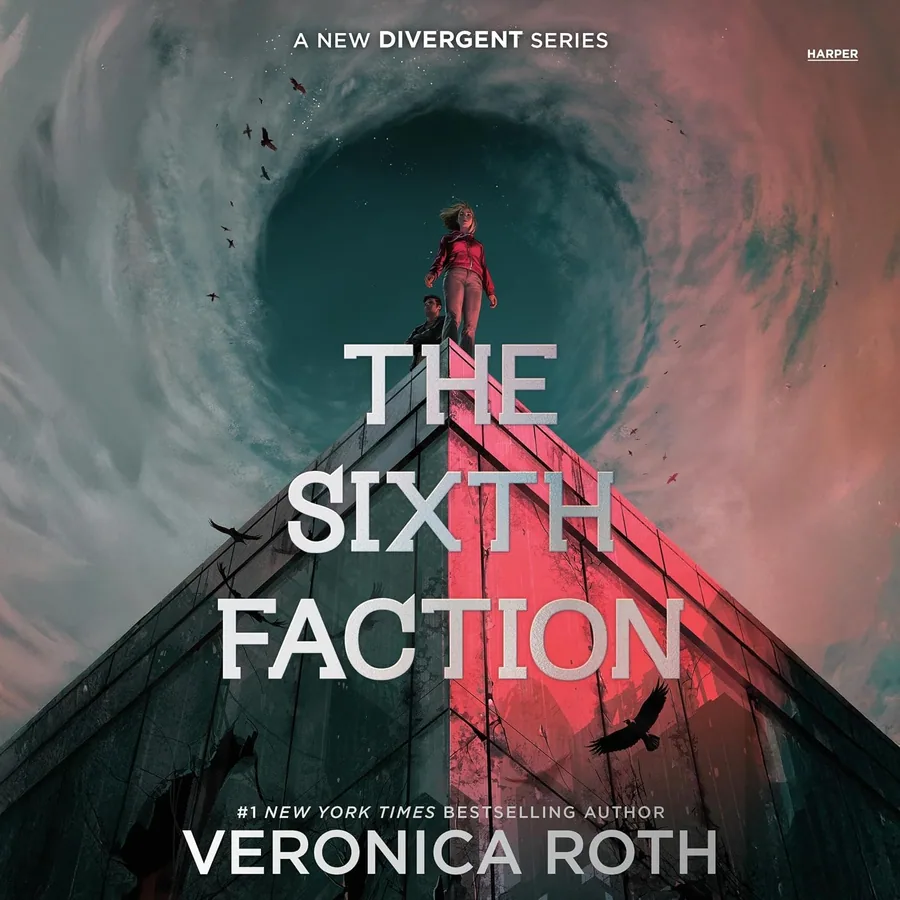
Where to read or listen
- Is there an audiobook of The Sixth Faction?
- Yes. The Sixth Faction has an Audible audiobook edition, narrated by Emma Love, Charlie Thurston, and Max Meyers.Listen free with Audible
We earn from qualifying Amazon purchases.
- How long is the The Sixth Faction audiobook?
- The The Sixth Faction audiobook runs 16 hr.
- Is The Sixth Faction on Kindle+?
- No. The Sixth Faction was not included with Kindle+ when we last checked on October 26, 2026.
- What formats is The Sixth Faction available in?
- On Amazon, The Sixth Faction comes as a Kindle ebook and a hardcover.
More by Veronica RothSee every Veronica Roth book we've reviewed, with our scores.All Veronica Roth books →
Common questions
- What is The Sixth Faction about?
- The Sixth Faction plays like a game of spot-the-difference run at full speed, and the fun is that you keep losing. You know this setup. Five factions, one choosing ceremony, and Beatrice Prior planning to walk out of Abnegation and into Dauntless because it's the bravest option on the board. Then…
- Is The Sixth Faction worth reading?
- We scored The Sixth Faction 4.6 out of 5. The Sixth Faction by Veronica Roth reopens the world of Divergent as an alternate reality, a YA dystopian retelling where Beatrice Prior's choosing ceremony goes wrong and every faction plays by different rules. It's a new series, and Divergent fans will get the most out of it.
More like this
Related books

The Hunger Games
Suzanne Collins

The Maze Runner (The Maze Runner, Book 1)
James Dashner

Divergent (Divergent Trilogy, Book 1)
Veronica Roth

The Giver (Giver Quartet, Book 1)
Lois Lowry

Shatter Me: A Journey of Strength and Rebellion Against a Dictatorship
Tahereh Mafi

Firekeeper's Daughter
Angeline Boulley

Wool
Hugh Howey

1984
George Orwell

Release Me
Tahereh Mafi

Parable of the Sower
Octavia E. Butler