Where to read or listen
- Is there an audiobook of The Road Less Traveled?
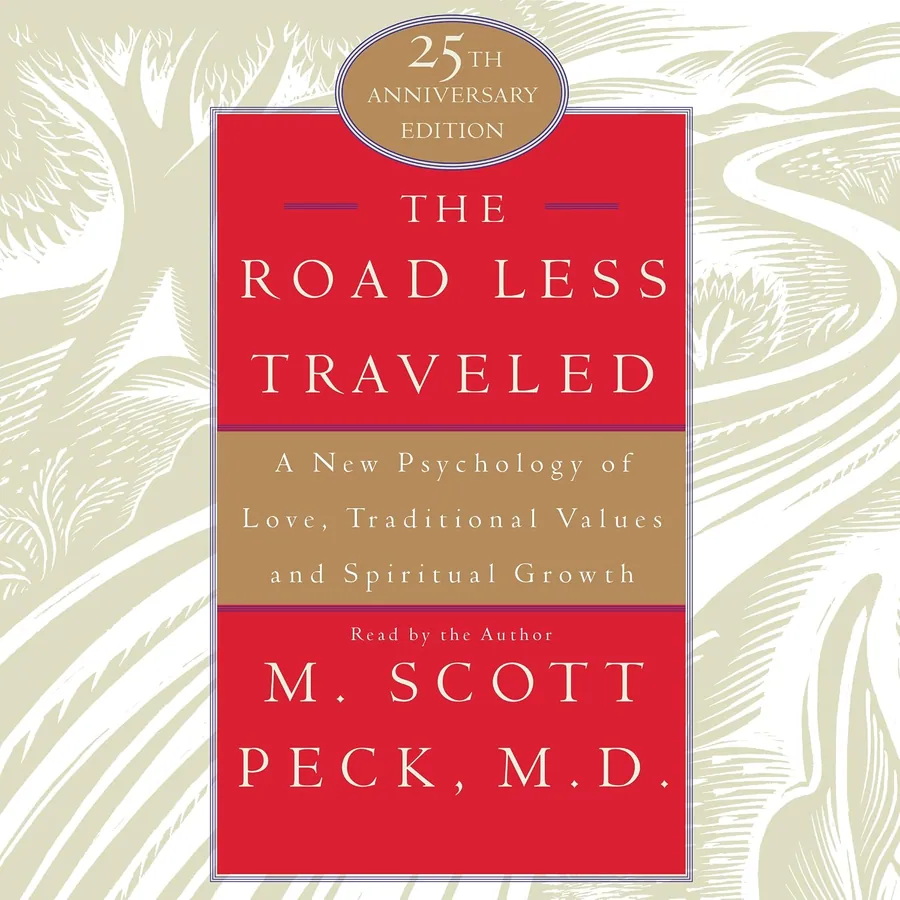
- Yes. The Road Less Traveled has an Audible audiobook edition, narrated by M. Scott Peck.Listen free with Audible
We earn from qualifying Amazon purchases.
- How long is the The Road Less Traveled audiobook?
- The The Road Less Traveled audiobook runs 4 hr 23 min.
- Is The Road Less Traveled on Kindle+?
- No. The Road Less Traveled was not included with Kindle+ when we last checked on November 23, 2026.
Common questions
- What is The Road Less Traveled about?
- M. Scott Peck was a psychotherapist, and his book reads like the work of someone who has spent years across from people trying to get out from under their problems. His first line sets the terms: "Life is difficult." The rest of The Road Less Traveled argues that accepting this is the starting…
- Is The Road Less Traveled worth reading?
- We scored The Road Less Traveled 4.8 out of 5. M. Scott Peck's The Road Less Traveled is a classic self-help and spirituality book from a psychotherapist, built on the claim that life is difficult and that facing problems on purpose is how people grow. It covers discipline, love, growth, and grace in patient, plain prose.
More like this
Related books

Atomic Habits: An Easy & Proven Way to Build Good Habits & Break Bad Ones
James Clear

The Alchemist
Paulo Coelho

The Gifts of Imperfection: Let Go of Who You Think You're Supposed to Be and Embrace Who You Are
Brené Brown

Be Your Own Bestie: A No-Nonsense Guide to Changing the Way You Treat Yourself
Misha Brown

The 7 Habits of Highly Effective People
Stephen R. Covey

Deep Work: Rules for Focused Success in a Distracted World
Cal Newport

The Power of Habit: Why We Do What We Do in Life and Business
Charles Duhigg

Daring Greatly: How the Courage to Be Vulnerable Transforms the Way We Live, Love, Parent, and Lead
Brené Brown

The 48 Laws of Power
Robert Greene

The Mastery of Love: A Practical Guide to the Art of Relationship
Don Miguel Ruiz