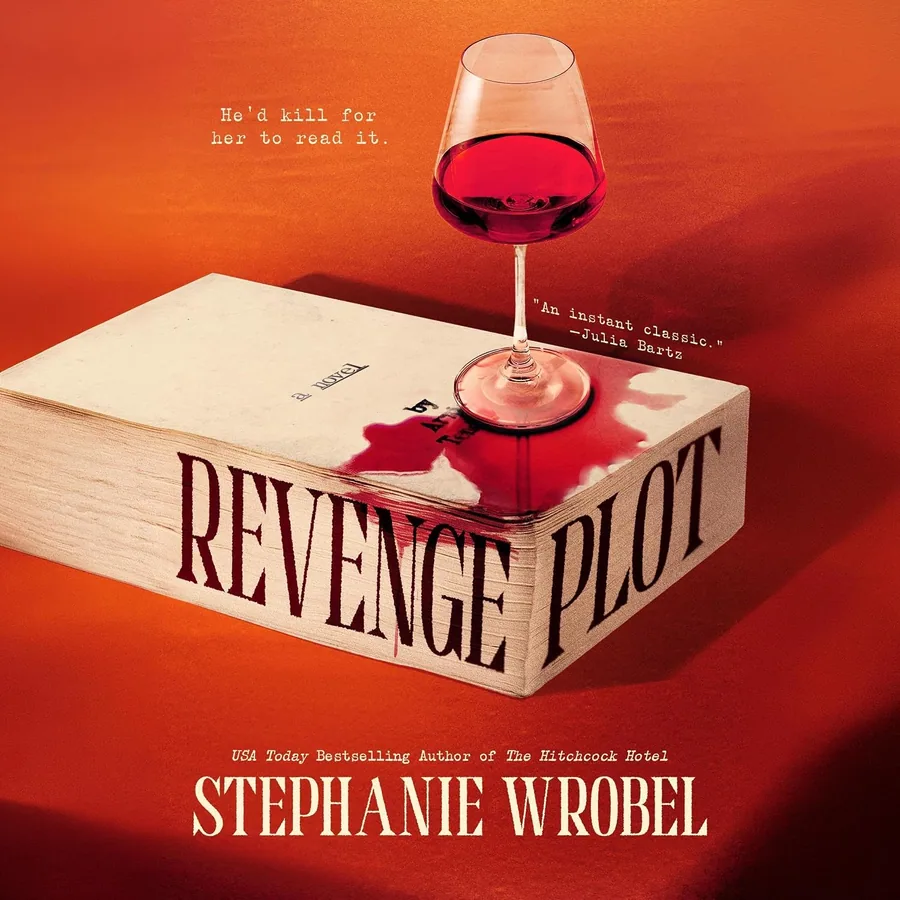
Revenge Plot starts small and tight, then keeps tightening. One woman, one remote treehouse in the Catskills, a ladder for a front door, snow piling up outside. Claudia Conley is a literary agent who has come here to be left alone on Christmas Day, with an absurdly elaborate dinner to cook and nobody to cook it for. The calm lasts exactly as long as it takes a stranger to turn up.
The stranger is Arnie Tenderton, an unpublished writer with a six-year-old named Theo in tow. Claudia has already turned him down once. Arnie filed that under unfinished business. He has a manuscript, and it is about her. Wrobel gives the setup a nasty little engine: a man who wants only one thing, and a woman who can't entirely stop being an agent even while the alarms go off. Part of Claudia keeps wondering whether the pages are any good. That's funny, and it's also exactly the sort of detail that makes a trapped-in-a-cabin story feel like people rather than pieces.
Then the book does something bolder. It leaves the treehouse. Readers who've spent the first stretch bracing for a two-hander get pulled into another writer's story, Neve's, set ten years earlier in 2014, when she was young, newly published, and Claudia was her agent. The dinner courses keep marking time while the past fills in. It's a structure that could wobble, and it doesn't. The two timelines lean on each other, and the connections among the characters come into focus a piece at a time, so the dread of the Christmas night never fully switches off even when the scene is somewhere else.
Atmosphere is the first thing readers praise, and fairly. The isolation, the weather, the ladder, the lack of any help within reach: the setting does half the work of scaring you. The publishing backdrop adds a dry bite, with insider detail about agents, rejections, and the market's appetite for dark, high-concept thrillers, a joke the book makes at its own genre's expense. Claudia reads submissions full of husbands who turn out to be monsters and holiday gatherings that end badly, and the novel knows it is a cousin of those.
The twisting is where Wrobel earns her fun. Suspicion shifts from character to character, and a fair number of readers report being wrong-footed more than once, then wrong-footed again. Nobody here is easy to like, which suits the premise. Sympathy keeps sliding around, and so does the question of who the real villain is. A comparison to Misery comes up often, since a writer's obsession in a snowed-in house invites it. The plot travels well away from that book, though, and the comparison sells the novel short.
Why you should read
- Snowbound, locked-room style suspense
- Stories about writers, agents, and publishing
- Dual timelines that slowly click together
- Thrillers with unlikable, morally murky characters
- Fans of Wrobel's Darling Rose Gold
What to expect
- A tight opening in one isolated treehouse
- A mid-book switch to a story ten years earlier
- Twists that keep shifting who you trust
- Heavy dread and wintry atmosphere
- An ending built to start arguments
The ending is the part people want to talk about, and it can't be discussed here. What can be said is that the book builds toward it with patience, and the final stretch rewards that patience. The setup is honored. A story about a writer who refuses to let the ending belong to anyone else has the sense to land its own ending with confidence.