Where to read or listen
- Is there an audiobook of Peak: Secrets from the New Science of Expertise?
- Yes. Peak: Secrets from the New Science of Expertise has an Audible audiobook edition, narrated by Sean Runnette.Listen free with Audible
We earn from qualifying Amazon purchases.
- How long is the Peak: Secrets from the New Science of Expertise audiobook?
- The Peak: Secrets from the New Science of Expertise audiobook runs 10 hr.
- Is Peak: Secrets from the New Science of Expertise on Kindle+?
- No. Peak: Secrets from the New Science of Expertise was not included with Kindle+ when we last checked on November 23, 2026.
Common questions
- What is Peak: Secrets from the New Science of Expertise about?
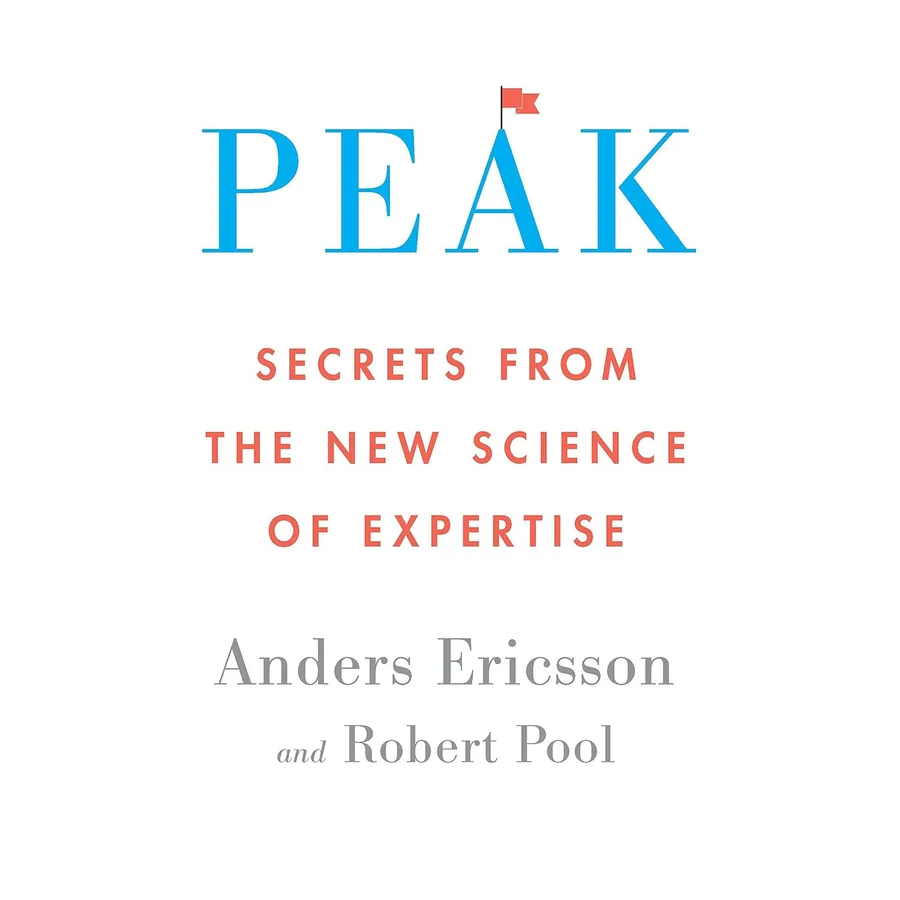
- Peak argues that expertise is built, and that most people build it badly. Anders Ericsson spent three decades studying top chess players, violinists, athletes, and memory experts, and he says the popular story is wrong: put in ten thousand hours and you will master anything. The kind of practice…
- Is Peak: Secrets from the New Science of Expertise worth reading?
- We scored Peak: Secrets from the New Science of Expertise 4.5 out of 5. Anders Ericsson's Peak lays out the science of deliberate practice and argues that expert performance in chess, music, sports, and memory comes from a particular kind of training rather than natural gifts. It is a practical psychology and self-improvement book, though readers…
More like this
Related books

The Subtle Art of Not Giving a F*ck: A Counterintuitive Approach to Living a Good Life
Mark Manson

Grit: The Power of Passion and Perseverance
Angela Duckworth

Tiny Habits: The Small Changes That Change Everything
BJ Fogg PhD

Range: Why Generalists Triumph in a Specialized World
David Epstein

Outliers: The Story of Success
Malcolm Gladwell

Mindset: The New Psychology of Success
Carol S. Dweck

Be Your Own Bestie: A No-Nonsense Guide to Changing the Way You Treat Yourself
Misha Brown

Quiet: The Power of Introverts in a World That Can't Stop Talking
Susan Cain

The 7 Habits of Highly Effective People
Stephen R. Covey

Deep Work: Rules for Focused Success in a Distracted World
Cal Newport