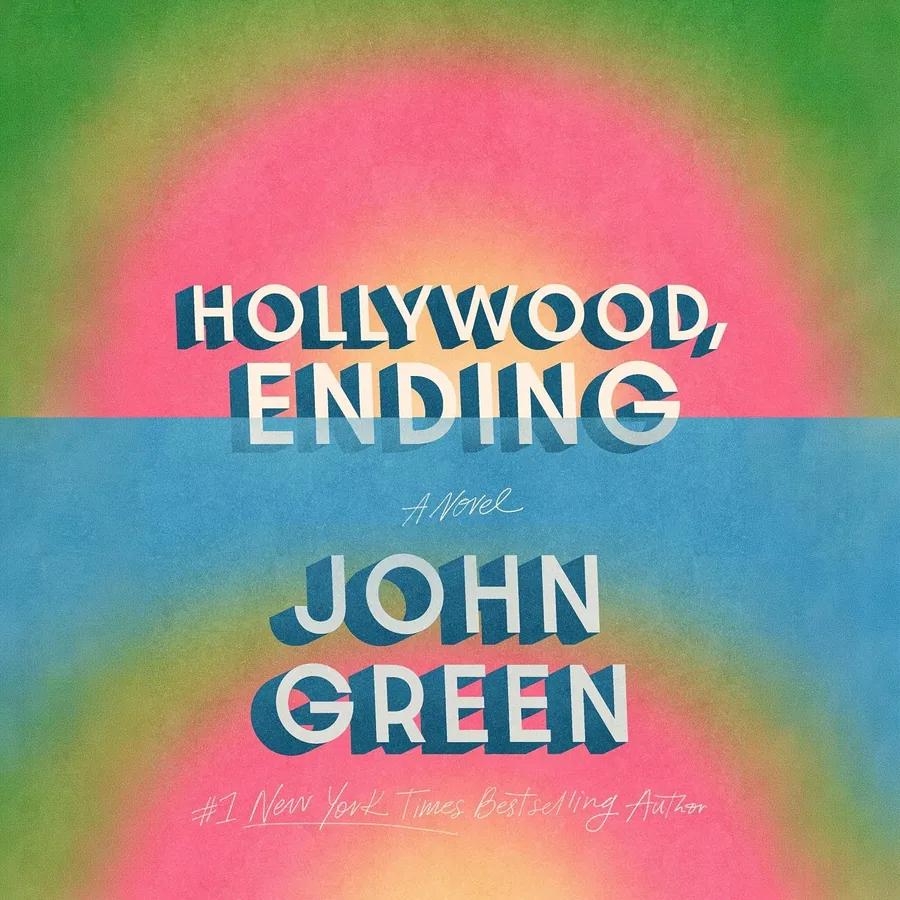
Reading Hollywood, Ending feels like sitting next to someone anxious and eloquent who has spent years thinking about what it means to be looked at, and who finally decided to say it all out loud. The sentences are plain and warm. They also have a habit of stopping you mid-page, usually over some small social moment where one person opens up and the other doesn't quite catch it. Those moments pile up, and the book gets under your skin before you notice it doing so.
The setup is simple. Kai Laramie and Juniper Castillo are both cast in Andy Warhol Never Gets Old, a biopic that looks like a break for each of them and turns out to be a lot more. The narration passes between the two, so we get the same stretch of time from two very different nervous systems. Juniper has been performing for most of her life, a former Nickelodeon star for whom auditions, rehearsals, and publicity are just the weather. Kai is a theater-loving kid from Indiana, new to all of it, and the pace of press and public attention leaves him dizzy. Their on-screen chemistry catches on with fans and studio executives faster than either of them can work out what they feel off camera.
What Green does with that setup is more interesting than the romance alone. The film they're making is about Warhol as celebrity culture was being born, and the novel keeps holding that story up against the machinery now chewing on Kai and Juniper: the interviews, the grooming, the way a studio wants to shape two rising stars into something marketable. He criticizes the attention economy without ever delivering a sermon. The criticism lives in recognizable scenes and in the small, painful business of performing yourself for other people, and it's all the sharper for how seldom he announces it. Not every figure in the system is a villain, either; there are people in it who work for the artist rather than the studio, and the book is better for admitting that.
Underneath the glamour sits something heavier. Both leads carry difficult histories, with abuse and neglect in their pasts, and part of what the novel asks is whether a person can live in the present without being swallowed by what happened. Acting becomes a way of coping for both of them. Readers who came to Green as teenagers and have aged alongside him will feel that this is a more grown-up book, one that treats trauma as something you learn to live with rather than something you finish.
It isn't flawless, and the complaint is a real one. Some longtime fans found it harder to attach to these characters than to his earlier ones, and you can hear the author's own cadences in both Kai and Juniper, which can blur the two narrators when the book most needs them distinct. Others will hear that same voice as the point: Green has to inhabit his people to make them speak. I lean toward the second view, mostly because the voice is so good company.
Why you should read
- Readers who grew up on John Green and want his adult turn
- Voice-driven contemporary romance with real emotional weight
- Stories about fame, performance, and the cost of being watched
- Dual-narrator novels that alternate between two close perspectives
What to expect
- Alternating points of view between Kai and Juniper
- Fast reading at 291 pages, with sharp observational moments
- Humor and tenderness alongside heavy themes of abuse and trauma
- A Green-style voice that carries both leads
At 291 pages it moves fast, and plenty of people will finish it in a day or two. The last paragraph is where it gets to you, and I'd keep tissues nearby.