Where to read or listen
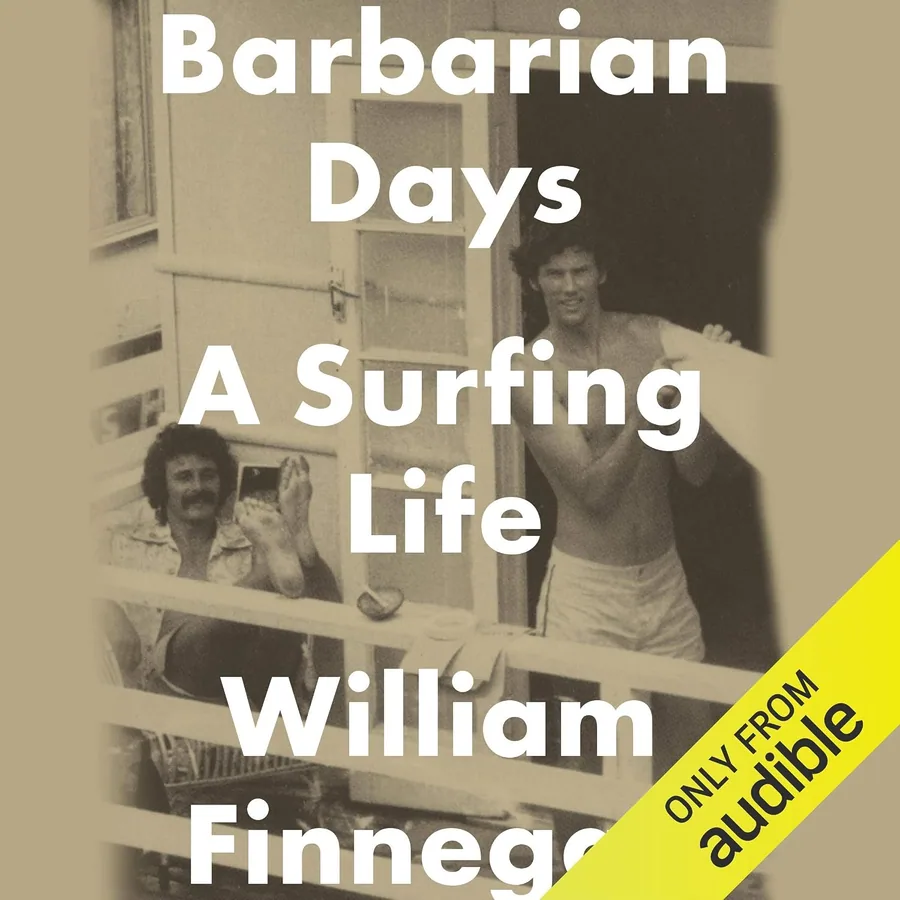
- Is there an audiobook of Barbarian Days: A Surfing Life?
- Yes. Barbarian Days: A Surfing Life has an Audible audiobook edition, narrated by William Finnegan.Listen free with Audible
We earn from qualifying Amazon purchases.
- How long is the Barbarian Days: A Surfing Life audiobook?
- The Barbarian Days: A Surfing Life audiobook runs 18 hr 8 min.
- Is Barbarian Days: A Surfing Life on Kindle+?
- No. Barbarian Days: A Surfing Life was not included with Kindle+ when we last checked on November 23, 2026.
Common questions
- What is Barbarian Days: A Surfing Life about?
- Reading Barbarian Days feels like being handed a long, specific obsession and being told to keep up. The sentences move the way water does: patient for a stretch, then suddenly quick, and then you're looking at a wave through someone else's eyes. William Finnegan writes about each break, its…
- Is Barbarian Days: A Surfing Life worth reading?
- We scored Barbarian Days: A Surfing Life 4.8 out of 5. Barbarian Days by William Finnegan is a Pulitzer Prize-winning surfing memoir about a lifelong obsession with waves, from childhood in California and Hawaii to breaks around the world. It reads like a travel adventure and a portrait of a man who never stopped chasing a good ride.
More like this
Related books

How to Rule the World: An Education in Power at Stanford University
Theo Baker

When Breath Becomes Air
Paul Kalanithi

Can't Hurt Me: Master Your Mind and Defy the Odds
David Goggins

I'm Glad My Mom Died
Jennette McCurdy

Just Mercy
Bryan Stevenson

You with the Sad Eyes
Christina Applegate

Disrupting the Game: From the Bronx to the Top of Nintendo
Reggie Fils-Aime

The Glass Castle
Jeannette Walls

Born a Crime
Trevor Noah

Friday Night Lights: A Town, a Team, and a Dream
H. G. Bissinger