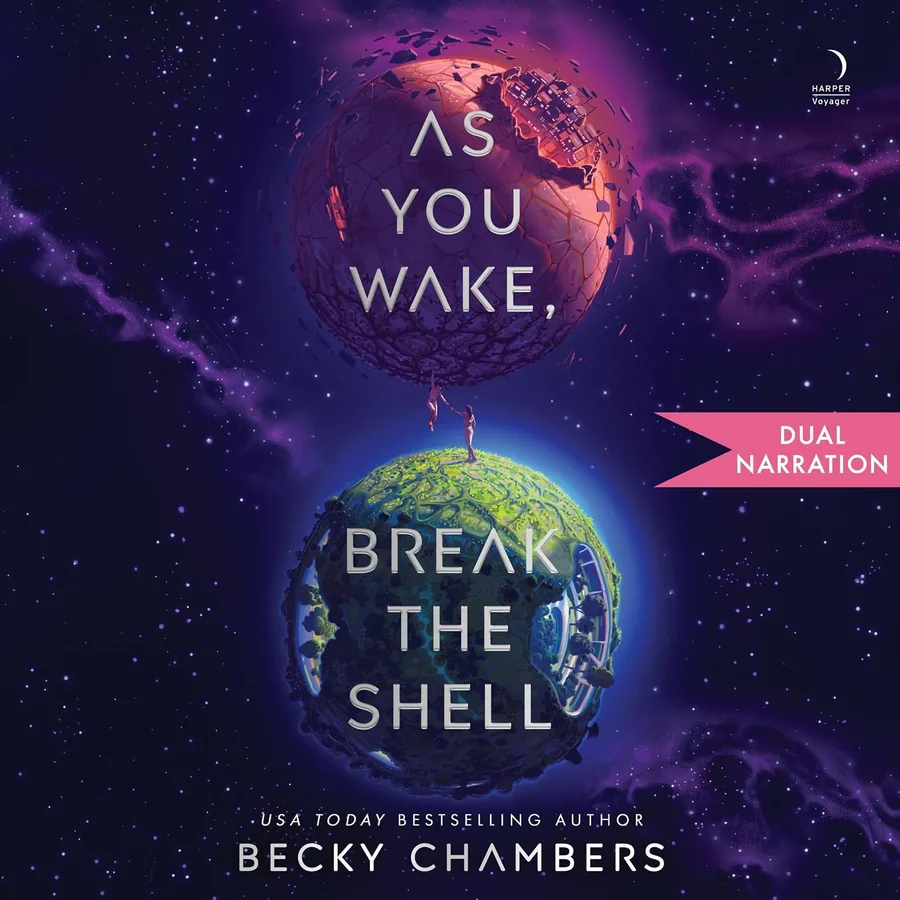
Cora is a rorqual pilot, and her body has started to give her away. The mindbleed that comes with steering living ships between the settlements of her solar system is a hazard of the job, and if it gets noticed, it could cost her the license that makes her who she is. So she goes looking for help in a botanist's shop. That detour is the engine of As You Wake, Break the Shell, and it lands her in front of Signy, a reclusive woman who bio-prints medicine and bends the rules to get it to people the system has walked away from. Cora's arrival drops Signy into the very danger she has spent years arranging her life to avoid.
This is the first half of a duology from Hugo Award-winning author Becky Chambers, and it sits comfortably with her other work. Readers who loved the Wayfarers books will recognize the warmth immediately, and the setting is entirely new, so nothing earlier is required. It also holds up by itself. The ending is open rather than sealed, which means you finish with a full emotional meal and a clear appetite for the sequel, not a cliffhanger that feels like a bait-and-switch. That is the right way to build a two-book science fiction romance.
Now the world, because it deserves a proper look. Fortune is resource-poor and hostile to human life, and the book never lets you forget what that costs. Cora's bond with her rorqual, Colibri, is the great gift of her life and the thing most likely to end her career, a single connection that cuts both ways. I love a speculative premise that charges its characters for the wonder, and this one does. The living ships are animals, and Cora refuses to treat them as machinery. Signy's printed medicine is the same idea turned toward people: a plant shop that keeps people alive because the official channels won't. In both cases the technology is simply part of daily life, no lecture attached, and the stakes sit on the people using it.
The structure is the boldest choice. The story alternates between the early days of Signy and Cora's meeting and a later point where they have been together for a couple of decades, living somewhere else, settled into something comfortable. Chambers announces the time-hopping at the start, and from there the pleasure is assembling the gap. You know where these two end up. What you want is the how, and what happened to them between a first meeting and a long shared domestic life. Emails and text conversations fill in pieces of their lives, which gives the book a lived-in texture. I'll be fair about the cost: the opening stretch asks for some patience, since the timeline shifts take a little while to settle and the handbook references and other interstitial pieces can interrupt the momentum before the central relationship gets its grip. Once it does, the book moves.
The tone is where Chambers does something special. A toxic planet and a medical system that triages people like inventory should produce a bleak book. Instead it reads as cozy science fiction with real stakes, danger present but never the point. Grief and loss are in here, and they land hard, comforting and brutal at once. There is also a streak of anger running under the gentleness, aimed at systems that treat basic needs as optional, and it gives the sweetness an edge. The romance sits in the background, close enough to carry the story, never crowding out the sci-fi or the other way around. Signy and Cora have distinct voices and they rub against each other in ways that come from temperament rather than plot convenience.
The supporting world pays off too. There is a colony seeded by a distant corporation, and a sentient beast-of-burden species that readers will end up caring about as much as the leads.
Why you should read
- Cozy science fiction with real stakes
- Fans of Becky Chambers and the Wayfarers books
- Queer love stories built on found family
- Dual-timeline novels that reward patience
- Hopepunk about caring inside broken systems
What to expect
- Alternating timelines, past meeting and settled future
- Character-driven plot with sci-fi as texture
- Emails, texts, and handbook interludes between chapters
- Warm tone with grief and a streak of anger
- Open ending that sets up the second book
What holds it together is a refusal to accept that some people, or some creatures, count for less. Signy won't live with the cold arithmetic of who gets help, and Cora won't treat her ship as a tool. That conviction runs through both timelines and gives a small, intimate love story the weight of an argument. The sequel has a lot to answer for, and I want it badly.